India is now one of the fastest-growing major economies in the world. According to the International Monetary Fund, India continues to maintain strong GDP growth compared to many developed markets. At the same time, global investors are actively looking for structured and compliant ways to access Indian markets.
One route that is gaining serious attention is GIFT City mutual funds under the IFSC framework.
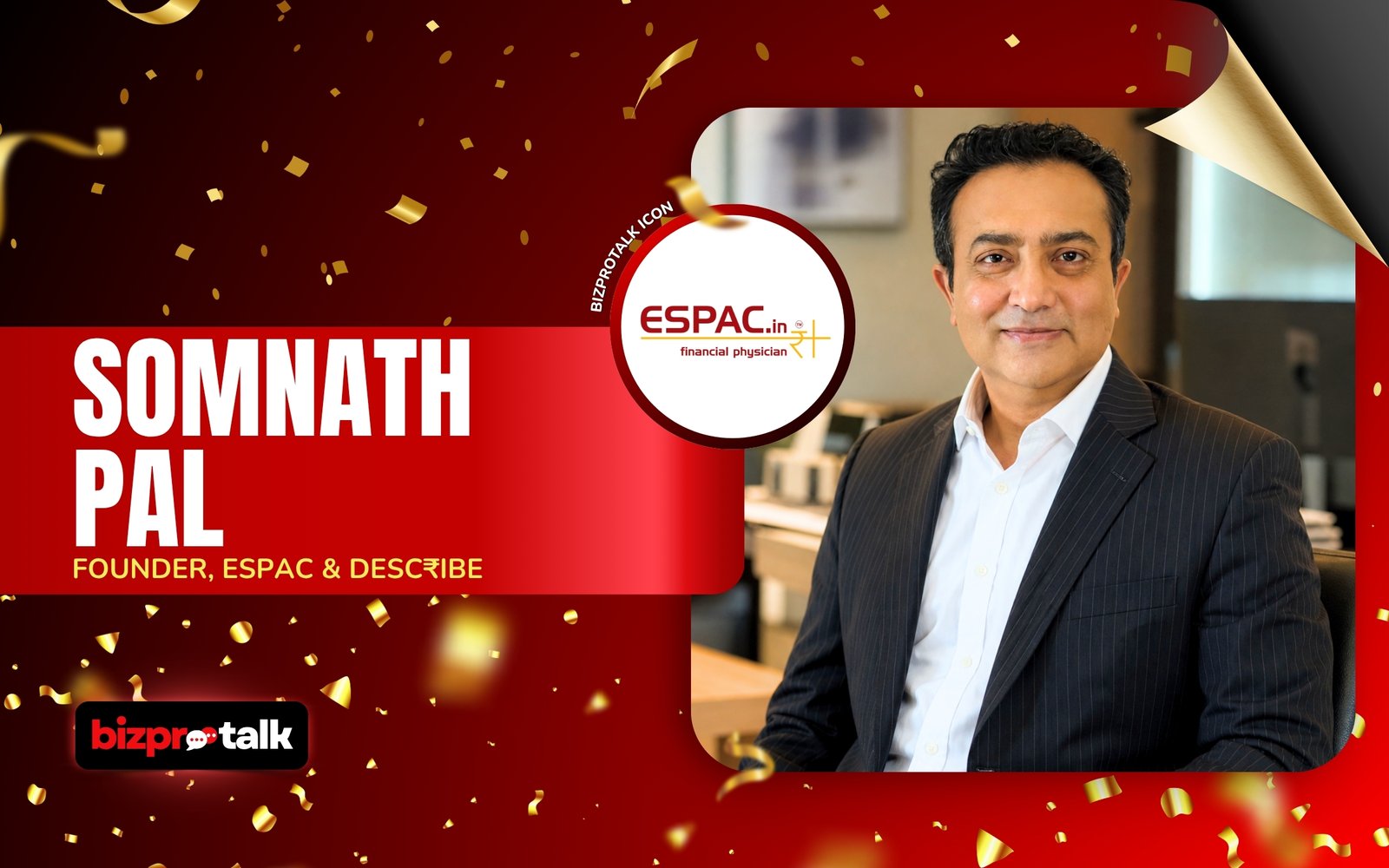
To understand how NRI investment in India is evolving through GIFT City, BizProTalk spoke with Mr. Somnath Pal, Founder of ESPAC, who works closely with cross-border investors and global families.
What follows is a detailed expert guide for NRIs and foreign investors exploring investment in India through GIFT City IFSC.
What is GIFT City IFSC, and why was it created?
Somnath Pal: GIFT City stands for Gujarat International Finance Tec City. It is India’s first operational International Financial Services Centre.
You can think of it as India’s attempt to create a financial ecosystem similar to Mauritius or Singapore within India. It is a financial hub by itself, governed by an international-style regulatory framework.
It is regulated by the International Financial Services Centres Authority. This authority ensures compliance, regulatory discipline, and global alignment across banking, fund management, insurance, and capital market activities inside the IFSC.
The purpose was clear. Instead of routing global investments through offshore jurisdictions, India created a structured environment within its own borders that could attract foreign capital under internationally acceptable standards.
Some say GIFT City is like a Mauritius or Singapore within India. Is that accurate?
Somnath Pal: Yes. That comparison is fair. For decades, investors used jurisdictions like Mauritius or Singapore to route investments into India. These jurisdictions offered tax efficiency and regulatory clarity.
GIFT City is India’s domestic alternative. It operates under its own regulatory framework, separate from the traditional domestic structure governed by the Securities and Exchange Board of India (SEBI).
The objective is to bring global capital directly into India without unnecessary layers.
What exactly are GIFT City mutual funds?
Somnath Pal: GIFT City mutual funds are investment schemes registered under the IFSC framework. They are different from traditional Indian mutual funds.
These funds are often:
- Dollar denominated
- Designed for cross-border investors
- Structured as feeder or offshore-aligned funds
They allow foreign nationals, NRIs, OCI, and institutional investors to participate in Indian markets under a globally compliant structure.
For anyone searching for how to invest in India from abroad, this structure provides a regulated pathway.
Can you clearly explain inbound and outbound investment under GIFT City?
Somnath Pal: This is the most important concept to understand.
There are two types of investments possible under GIFT City.
- First is inbound investment.
- Second is outbound investment.
Inbound investment means money is coming into India and getting invested in Indian markets.
Outbound investment means money is going out of India and getting invested in overseas markets like the US, S&P 500, Nasdaq, Greater China, or other offshore funds.
Who Can Invest in GIFT City Inbound Investment?
Somnath Pal: Inbound investment is meant for:
- NRIs
- OCI
- PIO
- Foreign nationals
- Foreign institutions
A British citizen, an Israeli citizen, or an Australian citizen, even if they are not of Indian origin, can invest in Indian markets through this inbound structure.
However, resident Indians cannot invest through the inbound IFSC structure. The reason is simple. If a resident Indian wants to invest in India, they can already invest through domestic mutual funds. There is no need for inbound routing.
This distinction is critical when discussing GIFT City inbound investment.

Who Can Invest in GIFT City Outbound Investment?
Somnath Pal: Outbound investment is primarily for resident Indians.
If a resident Indian wants exposure to Nasdaq, S&P 500, Greater China, or other international markets, they can invest through GIFT City outbound funds.
Here is how it works.
- The resident Indian invests in Indian rupees.
- The money gets converted into US dollars.
- It remains invested in the US Dollar.
- On redemption, it comes back in US dollars.
- Then it gets converted back into Indian Rupee.
This structure allows Indian residents to participate in global markets under the IFSC framework.
What is the benefit of investing in the US Dollar under GIFT City?
Somnath Pal: This is where the structure becomes powerful. For inbound investors such as NRIs or foreign nationals, the entire investment happens in US dollars.
>> The money comes into the fund in dollar denominations.
>> It remains invested in dollar denomination.
>> Redemption also happens in dollar denominations.
Now consider India’s equity markets. Historically, Indian equities have delivered 10 percent to 15 percent annualized returns over long periods.
At the same time, over the decades, the Indian Rupee has depreciated against the US Dollar.
So what is happening here?
The investor is earning:
- Returns from Indian equity markets
- Plus, the systemic long-term depreciation of the rupee against the dollar
This creates a dual benefit. The investor earns Indian growth returns while staying invested in the dollar. For someone keeping money in developed markets where returns are lower, this becomes attractive.
How Does Currency Depreciation Benefit Outbound Investors?
Somnath Pal: The benefit is similar but from the other direction.
A resident Indian gives money in rupees.
It gets converted into dollars.
It remains invested in the dollar during the entire holding period.
If the Rupee depreciates over time, the investor benefits from currency movement in addition to market returns.
When money comes back and is converted into rupees, the currency movement can enhance overall returns.
If the same investment had remained in rupees without conversion, currency depreciation would have reduced purchasing power. Through the IFSC outbound structure, it can become a return enhancer.
This is why currency volatility is not always a risk. In structured investing, it can be an advantage.
Is GIFT City Investment Tax-Free for NRIs
Somnath Pal: There is no universal tax-free investment.
For inbound investors such as NRIs or foreign nationals, capital gains are not taxed in India at the fund level under certain IFSC structures. It is not in the hands of the investor.
Taxation depends on the country of domicile.
- If a person resides in Australia, tax will apply in accordance with Australian law.
- If someone resides in the UK, they will follow UK tax rules.
- If in Israel or any other country, it will be subject to that country’s tax regulations.
India has double taxation avoidance agreements with many countries. Investors must consult local tax advisors before making decisions.
What Are the Primary Benefits of the GIFT City IFSC Structure?
Somnath Pal: The primary benefits are:
- Dollar-denominated investment for inbound investors
- Access to Indian equity growth for global investors
- Access to global markets for resident Indians
- Structured regulatory oversight under the IFSC authority
- Potential currency advantage
- Tax clarity based on domicile
India is an emerging economy. Markets are active and growing. When structured properly, IFSC provides a disciplined gateway to participate in that growth.
Is GIFT City IFSC Safe for Investors?
Somnath Pal: Safety depends on understanding structure and risk.
GIFT City operates under a regulated authority. That gives it institutional credibility.
However, investors must still consider:
- Market volatility
- Currency fluctuation
- Regulatory evolution
- Liquidity of specific funds
Investment risk does not disappear. It must be managed.
What is the minimum investment requirement?
Somnath Pal: Generally, IFSC funds have higher ticket sizes compared to domestic SIP mutual funds.
They are more suited for:
- High net worth NRIs
- Foreign nationals
- Institutional investors
- Resident Indians seeking global exposure
Small retail investors may find domestic mutual funds more suitable.
Final Advice from Somnath Pal to NRIs and Foreign Investors
Somnath Pal: First, understand whether you fall under the inbound or outbound category.
Second, evaluate your tax domicile before investing.
Third, do not focus only on currency or tax headlines. Align your investment with long-term financial goals.
India offers structural growth potential. But structure matters as much as return. GIFT City is definitely a powerful framework when used correctly.
As Peter Lynch said, Know what you own, and know why you own it.
If you are:
- An NRI exploring GIFT City inbound investment
- A foreign national seeking structured access to Indian markets
- A resident Indian looking for outbound exposure to NASDAQ or S&P 500
- An investor evaluating GIFT City IFSC tax benefits
You need clarity before allocation.
ESPAC works with NRIs, foreign nationals, and resident Indians to design compliant inbound and outbound investment strategies aligned with domicile taxation and currency exposure goals.
Schedule a confidential consultation with ESPAC.
CONNECT WITH ESPAC SOCIALLY
YouTube | Instagram | LinkedIn | Facebook
Structure your global investments with discipline. Participate in India’s growth with clarity.